Salt Lake City Utah Sugar House Furniture

Sugar House Furniture

Call: (801) 485-3606
×
  • Bedroom
    • Beds
    • Dressers & Chests
    • Night Stands
    • Mirrors
    • Miscellaneous
  • Dining
    • Trestle Tables
    • Pedestal Tables
    • Legged Tables
    • Cabinet Base Tables
    • Chairs
    • Barstools
    • Benches
    • Cabinets, Buffets, & Hutches
    • Sideboards & Servers
    • Mirrors
    • Miscellaneous
  • Living Room
    • Sofas & Loveseats
    • Chairs & Rockers
    • Entertainment Centers
    • Coffee Tables
    • Sofa Tables
    • End Tables
    • Display Cabinets
    • Fireplaces
    • Entryway Furniture
    • Mirrors
    • Miscellaneous
  • Office
    • Desks & Tables
    • Files & Cabinets
    • Bookcases
    • Office Chairs
    • Miscellaneous
  • Bathroom Vanities
  • Accessories
    • Clocks
    • Wall Hangings
    • Lamps & Lighting
    • Art Tiles, Frames, & Stands
    • Vases & Pottery
    • Rugs
    • Arts & Crafts Textiles
    • Mirrors
  • About Us
    • Our History
    • Blog
    • Reviews
    • Contact Us
  • Promotions

Your Helpful Guide to Identifying 5 Types of Wood Used in Furniture

Home / Archives for Furniture
identify types of wood Salt Lake City UT

If you’re looking for timeless furniture pieces with classic character and expert craftsmanship, you may have found yourself drawn to the sophisticated allure of mission-style furniture. These pieces are known for their sturdy construction and simple elegance. 

In order to truly understand and appreciate mission furniture, you must learn to recognize the distinct characteristics of the wood used in its construction. From the rich tones of cherry to the warm hues of oak, each type of wood has unique qualities and contributes to the overall charm of the final piece. 

In this helpful guide, we’ll examine the characteristics of five types of wood commonly used in mission furniture — oak, cherry, maple, walnut, and ash — so you can identify them next time you’re shopping for furniture.

Guidelines for Identifying Wood Types

While most reputable manufacturers provide information about the materials used in their products, it’s not always available, which is why it’s important to be able to identify wood types yourself — especially if you’re buying furniture secondhand. 

However, before attempting to identify the type of wood used in a particular piece of furniture, there are a few questions you must ask.

First, is it solid wood, or is it a man-made composite like particleboard? Does it have a veneer? If it’s not solid wood, it will be a lot trickier to identify. Your best bet is to ask the sales clerk or manufacturer about its composition.

Next, look at the color of the wood. Is it natural, or has it been stained? Stains and finishes can obscure details and make one type of wood look like another, so unless you have extensive experience, you may not be able to identify the wood species. If possible, look for surfaces that haven’t been stained, such as the underside of a tabletop or the backside of a dresser.

#1. Identifying Oak Wood

Since mission furniture is traditionally made with oak wood, let’s start there. Oak is one of the hardest, toughest woods and is known for its water resistance, which makes it perfect for furniture pieces that will see heavy use over the years.

There are two main types of oak wood — white and red. White oak is typically a light beige or brown, while red oak has rosy red or pink hues. Oak has a regular, straight grain pattern, very few knots or imperfections, and an uneven texture with pores, rings, and flecks.

Your Helpful Guide to Identifying 5 Types of Wood Used in Furniture

#2. Identifying Cherry Wood

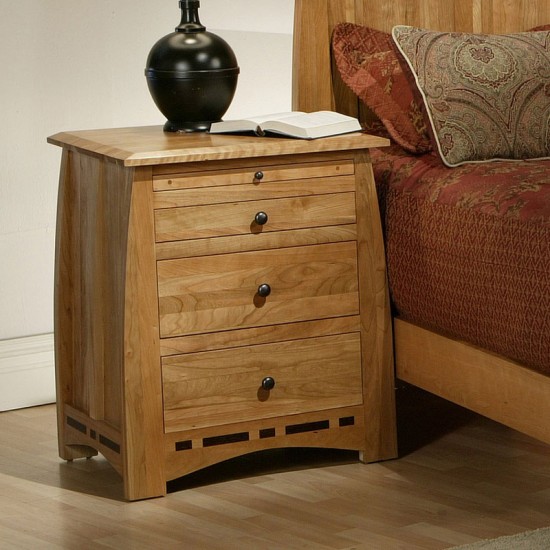
With its light pink or golden hue that darkens over time to a rich reddish-brown, cherry wood is another popular choice for furniture, mission-style or otherwise. It’s classified as a hardwood; however, it is not quite as durable as oak, maple, walnut, or ash. 

Cherry has a smooth, closed-grain pattern similar to maple. Depending on the way the tree grew, one piece of cherry wood can have contrasting grain patterns, creating a unique appearance. The closer the wood was to the tree’s center, the darker its grain is, with the lightest parts found closest to the bark.

Your Helpful Guide to Identifying 5 Types of Wood Used in Furniture

#3. Identifying Maple Wood

Maple is the strongest type of wood on this list and is known for its impressive durability. Typically, maple furniture is made using the sapwood of a maple tree — the part that’s closer to the bark layer. This gives the wood its light color, with red or brown tints from mineral streaks. It can also have pitch flecks, which are areas where the wood was injured, leading to the formation of darker spots. Over time, maple furniture will darken, developing a golden tint.

#4. Identifying Walnut Wood

Black walnut wood is relatively easy to identify thanks to its dark color, high density, and tight, straight grain. While some types of walnut can be light brown or yellow, most walnut furniture is made from the chocolate-brown heartwood found in the center of the tree. It’s tough and durable, with a hardness value between that of oak and cherry.

#5. Identifying Ash Wood

Ash wood is typically very light in color, with various shades of beige that tend to darken only slightly over time. It almost always has a straight grain but can occasionally grow in unique patterns. It’s lightweight yet durable, making it a popular choice for everything from furniture to baseball bats to tools.

Fine Wood Furniture in Salt Lake City, Utah

At Sugar House Furniture, we are proud to provide heirloom-quality oak, cherry, and maple furniture crafted by experienced artisans. Whether you’re searching for a perfect statement piece or a full set, our mission furniture is sure to stand the test of time. Come visit us in Salt Lake City to see what we have to offer!

Filed Under: Furniture

wood staining Salt Lake City UT

In our last blog post, “A Complete Guide to Historic Wood Finishes for Mission Furniture,” we discussed the traditional wood finishing techniques outlined in a Popular Mechanics handbook from 1909 called “Mission Furniture: How to Make It.”

While some traditional wood finishing techniques, like the use of natural oil, have stood the test of time, others have not. In the century-plus since mission furniture’s genesis, we have developed countless innovative wood finishing techniques, providing greater durability and versatility than ever before.

If you’re looking to invest in mission furniture, it’s essential to understand common wood finishing methods to find high-quality products that will stick around for generations. In this blog post, we’ll explore some of the most popular wood finishing techniques you’ll see in the mission furniture industry today.

Why is Wood Finishing Necessary?

Exploring Modern Wood Finishing Techniques for Mission Furniture

Before we get into specific wood finishing techniques, let’s talk about why wood finishing is necessary. The main reason to apply a finish is to protect the wood. Wood is porous, which means that it will absorb moisture, oils, and dirt. By finishing the wood, you make it more resistant to stains and water damage. This also makes the wood less likely to expand and contract with changing temperatures and humidity levels.

In addition to its functional benefits, wood finishing provides aesthetic advantages, as well. Finished wood is easier to keep clean — rather than getting embedded in all the grooves and pores, dirt and dust can be easily wiped off. Plus, applying a finish enhances the wood grain by increasing the contrast between light and dark shades.

Depending on the type of finish used for your mission furniture, it may have to be refinished every once in a while to keep the wood in top condition. This can either be done at home or by a professional craftsman. If you have questions about refinishing, don’t hesitate to contact us for advice.

Common Wood Finishing Products

Quality wood furniture, whether crafted in the mission style or not, will likely have one of the following finishes. Each of these wood finishing products has its own strengths and is suitable for diverse applications, so it’s important to understand these differences to determine whether a furniture piece will meet your needs before buying.

Natural Oil

Natural oil finishes, including tung or linseed oil, are excellent for highlighting the grain and texture of the woods, making them a popular choice for mission furniture. They penetrate deep into the wood, enhancing its rustic natural beauty and providing a low sheen. These finishes may require occasional reapplication to maintain their appearance.

Shellac

Shellac, a type of resin, is a traditional wood finish. It gives mission furniture a warm amber hue while offering a moderate level of protection against wear and moisture. Shellac is easy to apply and dries quickly, making it perfect for DIY furniture restoration projects.

wood staining Salt Lake City UT

Lacquer

Lacquer is available in both clear and tinted varieties, offering a durable, glossy coating and providing excellent protection against spills, scratches, and UV damage. While lacquer products require careful application, they create a smooth finish that complements mission-style furniture.

Polyurethane

Polyurethane is a unique type of polymer that can provide varying levels of sheen. It’s elastic like rubber but can be repeatedly reformed like plastic, making it exceptionally durable and resistant to abrasions. Oil-based polyurethane finishes offer outstanding protection and depth, but water-based options dry faster and emit fewer fumes.

Varnish

Varnish is made of a blend of solvent, resin, and drying oil. It forms a hard, transparent film over wood surfaces, protecting them from moisture and heat. Whether you prefer a matte or glossy finish, varnish allows you to customize the look of your furniture while ensuring its longevity. Applying varnish requires meticulous surface preparation and proper ventilation, but to many artisans, the beautiful and durable results justify the extra effort.

Wax

Wax finishes like beeswax or carnauba wax provide a soft, lustrous sheen, enhance the wood’s natural color, and create a smooth surface. However, wax offers limited protection against spills and scratches when compared to other wood finishing options. For those who prefer a traditional, hands-on approach to maintenance, regular waxing is a great way to maintain wood furniture’s beauty and integrity.

Stain

Stains are specially formulated to add color to wood while allowing the natural grain to shine through. Because they’re available in an array of hues, wood stains enable you to customize your furniture’s appearance to suit your aesthetic preferences. 

Explore the Possibilities of Mission Furniture

At Sugar House Furniture, we aim to provide high-quality furniture that will endure the trials of time. Whether you prefer an eye-catching stain or a more natural oil-based finish, we have a wide range of options to choose from. Come visit us in Salt Lake City, Utah, to see for yourself the difference that expert wood finishing can make.

Filed Under: Furniture

A Complete Guide to Historic Wood Finishes for Mission Furniture

Mission furniture is rooted in the Arts & Crafts movement of the late 19th century. One of the oldest primary resources available on mission furniture is a Popular Mechanics handbook from 1909 titled “Mission Furniture: How to Make It” by H.H. Windsor. This book outlines detailed plans for constructing chairs, desks, shelves, and more. 

The handbook also includes information on how to achieve various wood finishes, giving us a window into the past and helping us understand the techniques early mission furniture craftsmen used to create the timeless appearance we still enjoy today. 

However, if you decide to follow Windsor’s advice, just know you do so at your own risk — we can’t vouch for all the methods the book describes, and the instructions are far from comprehensive. Not all these wood finishing techniques may be safe or effective without specialized expertise.

True Mission Oak Stain

According to Windsor, the “true mission oak stain” is a dull gray with reddish flakes and almost-black grain. This look can be achieved with a mixture of black and pink pigments, oil, japan drier, and turpentine.

Flemish Finish

Flemish oak was one of the most popular “fancy oaks” in 1909. Windsor recommends filling the wood with a paste filler strained with raw umber and, once it’s dry, applying a stain made from transparent flat raw umber. For darker shades, a drop of black pigment can be added to the stain.

A Complete Guide to Historic Wood Finishes for Mission Furniture

Mahoganizing

To create a finish that looks like mahogany, the handbook recommends rubbing diluted nitric acid into the wood, then using a brush to apply a stain made with dragon’s blood (a type of resin) and sodium carbonate dissolved in alcohol. Multiple coats can be applied. Rubbing the wood with a bit of raw linseed oil can add extra luster and shine.

Linseed Oil

For craftsmen on a budget, the book recommends mixing equal parts of boiled linseed oil and asphaltum varnish, brushing it on, removing the excess with a rag, and applying a coat of varnish.

Filling Oak

Two parts turpentine, one part raw linseed oil, and a bit of japan drier can make a “very good” hardwood filler for oak. After applying a coat of filler, let it stand until it turns gray, then rub it off with a rag. To show off the wood grain and give it a golden effect, you can apply a coat of burnt umber stain prior to the filler.

Wax Finishing

For wax-finishing softer woods, first apply a stain, then a liquid filler or shellac. Two parts melted wax and one art turpentine can be rubbed vigorously into the wood with stiff bristles or a woolen rag to produce an eggshell gloss effect.

Often, waxing open-grained wood will show white streaks in the pores. To minimize this effect, use black wax instead. While artisans in 1909 had access to black wax, they could also make their own by melting floor wax, adding a drop of black pigment, and allowing the wax to cool and harden. Windsor promises that this wax won’t streak but give a smooth, glossy finish.

Oak Fuming

Ammonia fuming can be difficult and dangerous, but according to Windsor, “Darkened oak always has a better appearance when fumed with ammonia.” The ammonia doesn’t actually make contact with the wood — instead, a small saucer of it is placed in an airtight container, with the wood suspended above it. After a few days, the fumes will create a dark or grayish color. The wood should be waxed afterward, not varnished.

wood finish Salt Lake City UT

Additional Wood Finishes

If you’re a mission furniture purist, you’re free to stick with the old-fashioned wood finishes, but it has been well over a century since mission furniture originated. Thanks to modern innovations in manufacturing and materials, there are now endless options for wood finishes that contemporary Arts & Crafts artisans did not have access to. 

To learn more about modern wood finishing techniques and how they compare to the historic methods recommended in the 1909 handbook, check out another one of our blog posts, “Exploring Modern Wood Finishing Techniques for Mission Furniture“.

The Timeless Beauty of Mission Furniture

At Sugar House Furniture, we celebrate the traditional techniques pioneered by long-ago craftsmen. Each of our heirloom-quality furniture pieces is created with timeless beauty in mind, reminiscent of the past while also suiting modern interiors. To see what we have to offer, come visit us in Salt Lake City, Utah, or browse our website. Don’t hesitate to reach out with any questions.

Filed Under: Furniture

« Previous Page
Next Page »

About

Sugar House Furniture provides finely-crafted mission furniture to residents throughout the Salt Lake City area, who are looking to add an extra touch of elegance and quality to their home.

2892 S. Highland Drive
Salt Lake City, Utah 84106
(801) 485-3606

Hours

Monday 10 AM - 7 PM
Tuesday 10 AM - 6 PM
Wednesday 10 AM - 6 PM
Thursday 10 AM - 6 PM
Friday 10 AM - 6 PM
Saturday 10 AM - 5 PM
Sunday Closed

SUBSCRIBE

Follow Us

Sugarhouse Furniture - Facebook Sugarhouse Furniture - Twitter Sugarhouse Furniture - Instagram Sugarhouse Furniture - Instagram

2026Sugar House Furniture | All Rights Reserved | Privacy Policy | Terms | XML Sitemap | Sitemap | Site by PDM