Salt Lake City Utah Sugar House Furniture

Sugar House Furniture

Call: (801) 485-3606
×
  • Bedroom
    • Beds
    • Dressers & Chests
    • Night Stands
    • Mirrors
    • Miscellaneous
  • Dining
    • Trestle Tables
    • Pedestal Tables
    • Legged Tables
    • Cabinet Base Tables
    • Chairs
    • Barstools
    • Benches
    • Cabinets, Buffets, & Hutches
    • Sideboards & Servers
    • Mirrors
    • Miscellaneous
  • Living Room
    • Sofas & Loveseats
    • Chairs & Rockers
    • Entertainment Centers
    • Coffee Tables
    • Sofa Tables
    • End Tables
    • Display Cabinets
    • Fireplaces
    • Entryway Furniture
    • Mirrors
    • Miscellaneous
  • Office
    • Desks & Tables
    • Files & Cabinets
    • Bookcases
    • Office Chairs
    • Miscellaneous
  • Bathroom Vanities
  • Accessories
    • Clocks
    • Wall Hangings
    • Lamps & Lighting
    • Art Tiles, Frames, & Stands
    • Vases & Pottery
    • Rugs
    • Arts & Crafts Textiles
    • Mirrors
  • About Us
    • Our History
    • Blog
    • Reviews
    • Contact Us
  • Promotions

6 Steps to Eclectic Design: How to Mix and Match in Your Home

Home / Archives for Furniture

Looking to create a home that truly reflects your personality? Eclectic design offers the freedom to mix and match styles, colors, and textures for a space that’s uniquely yours. Whether you love vintage pieces or modern touches, this approach allows you to combine different elements while still maintaining balance. Ready to explore how you can bring creativity and individuality into your home? Let’s dive into the art of eclectic design!

What is Eclectic Design?

Eclectic design is all about blending diverse elements from different styles, eras, and cultures to create a unique, personalized space. It encourages freedom of expression, allowing you to mix bold patterns, colors, and textures while showcasing your creativity. The key to eclectic design is balancing this diversity—although it may include a variety of furniture, decor, and accessories, there should still be a sense of harmony. This can be achieved through cohesive color schemes or repeated design elements that tie the space together to ensure it feels intentional rather than chaotic.

6 Steps to Make an Eclectic Interior Design
6 Steps to Eclectic Design: How to Mix and Match in Your Home

1. Establish a Foundation

When creating electric design, establishing a foundation with neutral tones is essential for creating balance. Starting with neutral-colored walls or large furniture pieces like sofas and rugs helps ground the room, providing a calm backdrop for more vibrant elements. Neutral shades such as whites, grays, or soft beiges allow the bolder accents—like colorful pillows, eclectic artwork, or patterned rugs—to stand out without overwhelming the space. This balance ensures that the room feels cohesive and visually engaging, and lets your room have unique accents while maintaining a harmonious flow.

2. Choose a Color Palette

The next step in creating an eclectic design is to choose a cohesive color palette to create harmony among diverse elements. While mixing styles and patterns, sticking to a unified color scheme helps tie the room together. Select a few main colors, and then use complementary shades to create balance across different pieces. For example, if your furniture is bold, choose accents in softer tones to complement them. Mixing textures and patterns is encouraged, but maintaining a consistent color palette ensures that the room feels unified rather than chaotic, allowing each element to shine without clashing.

3. Mix Textures and Materials

Mixing materials and textures is essential in eclectic design to create visual interest and depth. Incorporate a variety of textures like wood, metal, fabric, and glass to bring contrast and richness to a space. For instance, you could pair rustic wooden furniture with sleek modern metal accents, or soften industrial elements with plush fabrics. Combining materials from different design styles adds character and ensures the space feels layered and dynamic. The key is to balance rough and smooth surfaces, hard and soft elements, so that the room feels cohesive despite the mix of styles.

4. Blend Furniture Styles

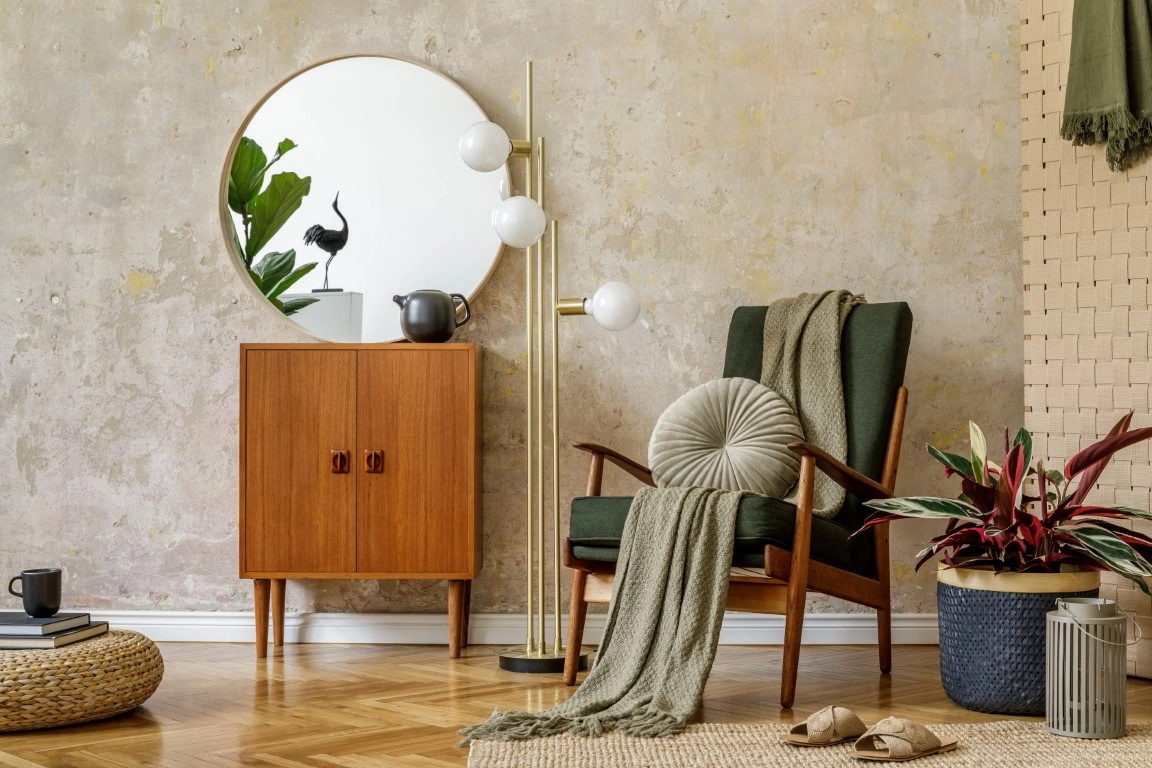
Blending furniture styles is a hallmark of eclectic design. Pairing vintage and modern pieces creates an exciting contrast, and adds depth and personality to your space. For example, a sleek, minimalist sofa can be balanced with a vintage armchair or antique coffee table. When mixing oversized furniture with minimalist pieces, be sure the room’s scale remains balanced by avoiding overcrowding. Strategically placing larger items as focal points while keeping smaller, modern items as accents helps to maintain harmony in the design, and helps the mix feel intentional and not random.

6 Steps to Eclectic Design: How to Mix and Match in Your Home

5. Incorporate Patterns and Prints

Incorporating patterns and prints adds character to an eclectic space, but the key is balance. To mix bold patterns without overwhelming the room, start by choosing one dominant pattern, such as floral or geometric, and complement it with smaller-scale or subtler prints. Pairing florals with geometric designs can create a striking contrast, while abstract prints bring in a modern touch. Remember to stick to a cohesive color palette to keep the patterns unified. You can also spread the prints across textiles like pillows, rugs, or curtains to maintain harmony while giving the room a playful and dynamic feel.

6. Maintain Balance and Cohesion

Maintaining balance and cohesion is the most important thing when mixing and matching in eclectic design. To avoid clutter, focus on intentional placement and give each piece room to breathe. Repeating certain elements, such as color, texture, or material, helps create flow throughout the space. Symmetry can also bring harmony, whether through paired items or balanced furniture arrangements. 

Find Custom Furniture at Sugar House Furniture

Sugar House Furniture offers a wide range of handcrafted, quality furniture that is perfect for creating an eclectic interior design. Whether you’re looking to mix rustic, modern, or vintage styles, our unique selection of Mission and Arts & Crafts furniture can help you blend different elements seamlessly. With custom design options and timeless pieces, you can express your personal style while maintaining harmony throughout your home. Visit us to find the perfect pieces for your eclectic space!

Filed Under: Furniture

Blending vintage and contemporary interior design in your home is a great way to create a unique, personalized space that reflects your unique taste. As you curate a design style that mixes old and new, consider mission furniture. With its clean lines and timeless appeal, it’s the perfect foundation to bridge these two worlds, allowing for modern touches that bring a fresh look. 

In this blog post, we’ll explore how you can effectively mix vintage and contemporary elements to create a space that’s uniquely yours.

Understanding Mission Furniture: A Classic Foundation

Mission furniture originated in the late 19th century. It features flat panels, straight lines, and solid wood construction. This practical and durable style is the perfect anchor for a room that blends old and new design styles. 

One of the biggest strengths of mission furniture is its versatility and understated elegance, allowing it to pair well with both vintage and modern elements. Its rich wood tones and minimalistic design serve as a neutral canvas, allowing the surrounding décor to shine.

6 Tips for Blending Vintage and Contemporary Interior Design

1. Start with a Statement Piece

As you begin curating your space, select a statement piece of mission furniture. Once you’ve chosen your focal point — whether it’s a dining table, sideboard, or sofa — you can start building the room around it.

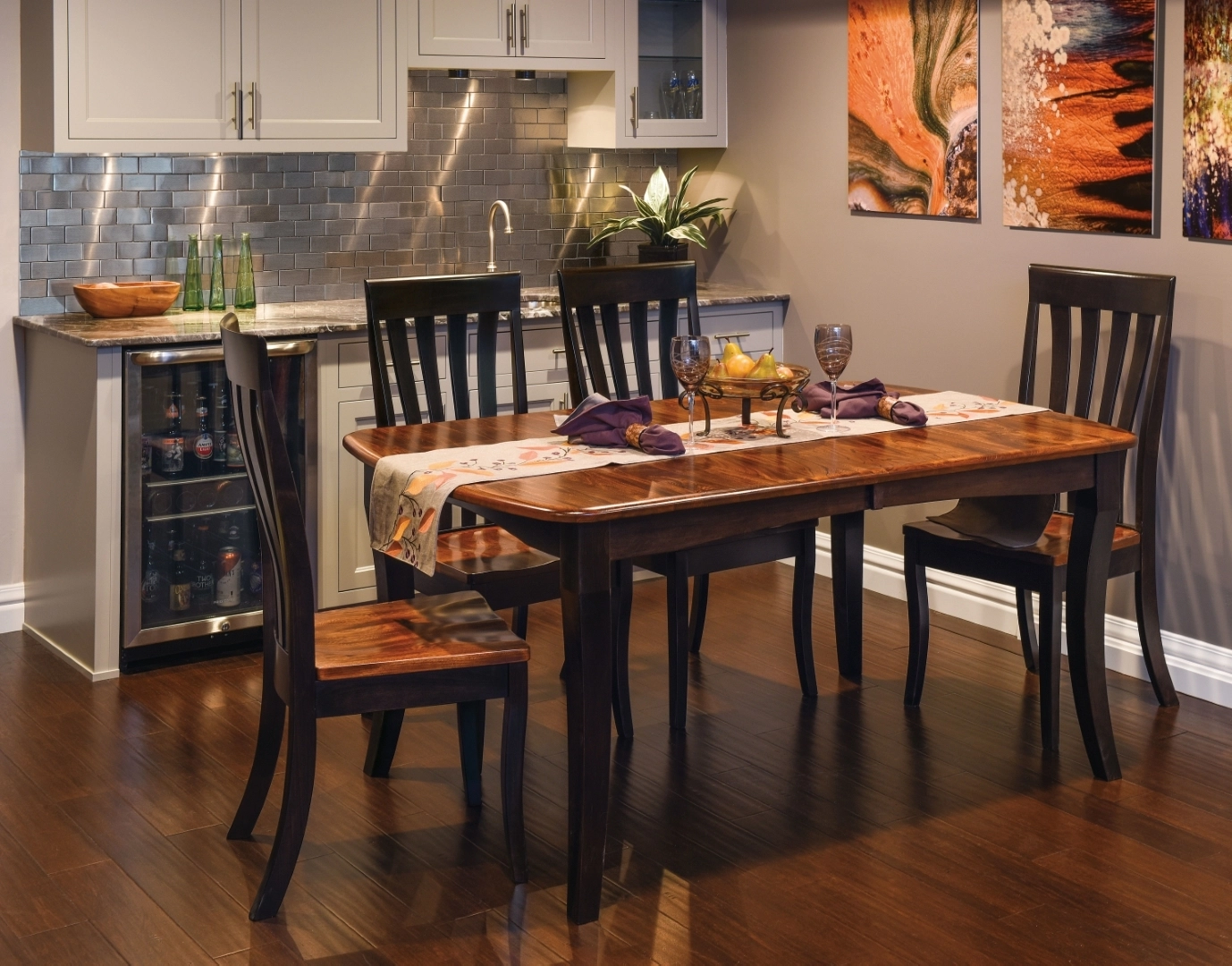
For instance, a beautiful mission-style dining table can serve as the centerpiece of your dining room. Add contemporary chairs that feature sleek lines or modern materials, and hang vintage-inspired artwork on the walls. This juxtaposition will highlight the traditional craftsmanship of the mission table while maintaining a fresh and current look.

2. Incorporate Modern Lighting

Lighting is a powerful interior design tool, no matter what overall aesthetic you prefer. Although mission furniture is grounded in tradition, you can use contemporary lighting fixtures, such as floor lamps, pendant lights, and wall sconces, to introduce a sense of modern flair. 

The key to blending modern and vintage is choosing lighting that complements the simplicity of your mission furniture without overpowering it. Consider lights with clean lines, geometric shapes, and metallic finishes to contrast with and enhance the natural wood tones of your mission furniture while introducing a new layer of texture and interest to the room.

6 Tips for Blending Vintage and Contemporary Interior Design

3. Mix Textures and Fabrics

Speaking of texture, another effective way to blend vintage and contemporary styles is by mixing a variety of textures and fabrics. Mission-style sofas and chairs often feature upholstery made from leather or a hearty woven fabric, which can be paired with textiles like velvet, silk, and knits to create a visually appealing contrast.

For example, try pairing mission-style, leather-upholstered loveseat with contemporary throw pillows in eye-catching colors or patterns. A modern, geometric rug can anchor the room, visually defining the space and tying together the old and new elements. 

4. Accessorize Thoughtfully

Accessories have the power to pull a room together, creating a cohesive and interesting look. When blending vintage and modern design elements, you must seek the perfect balance with your decor. Too many vintage pieces can make the space feel dated, while too many contemporary items can overwhelm the more traditional components.

To create an intentional and cohesive aesthetic, choose accessories that reflect both eras. For instance, vintage artwork or knick-knacks can be paired with contemporary sculptures or abstract art. Fill a mission-style bookshelf with a mix of old and new books, photographs in thrifted frames, and modern decorative objects.

5. Embrace Color Contrast

Mission furniture typically features the warm tones of natural wood, which gives you a wide range of suitable color scheme options, from neutral shades to bold hues. Don’t be afraid to experiment with different palettes to find something that complements both vintage and contemporary elements.

Consider using a soft, neutral shade for the walls to allow your mission furniture to shine. Introduce pops of color such as emerald green, navy blue, or mustard yellow through artwork, accessories, or an accent wall. These bold shades add a modern twist while still harmonizing with the wood furniture.

6 Tips for Blending Vintage and Contemporary Interior Design

6. Keep the Balance

When all is said and done, the most important aspect of mixing vintage and contemporary interior design elements is maintaining a sense of balance. Too much of one style or the other can make the space feel disjointed and jarring. 

When arranging a room, step back and assess its overall composition and whether it feels balanced. Are old and new equally represented? Keep in mind that the beauty of mixing styles lies in the contrast and interaction between them.

Mission Furniture for Vintage and Contemporary Homes

Whether you prefer vintage, contemporary, or a mixture of both, Sugar House Furniture has the quality mission furniture you need to complement your unique sense of style. Come visit us today to browse our wide range of beautiful furnishings.

Filed Under: Furniture

Mission furniture is known for its superior craftsmanship and robust construction. Developed in the late 19th century as part of the Arts and Crafts movement, the appeal of this classic style has endured for over a century.

One of the highlights of mission furniture is something that’s not always apparent at first glance: the joinery techniques used in its construction. Rather than the cheap, slapped-together joints found in most mass-produced furniture, mission furniture takes advantage of the strength and durability of traditional joinery, ensuring it stands the test of time.

In this blog post, we’ll explore five types of wood joinery techniques commonly used in mission furniture, helping you gain a greater appreciation of the craftsmanship that goes into making these heirloom-quality pieces.

1. Butt Joints

The butt joint is the simplest example of wood joinery. It connects two pieces of wood edge-to-edge, typically either at a 90-degree or 180-degree angle. The connection is secured using nails, screws, or dowels. 

Dowels are the most aesthetically pleasing, as they are not visible from the outside. To achieve this joint, craftsmen drill equal-sized holes into the sides facing each other, then insert a small dowel into both holes and glue the wood together for extra security.

While they get the job done, butt joints are not the strongest type of joinery, so they’re best used in areas that don’t see a lot of stress.

Explore 5 Wood Joinery Techniques Used in Mission Furniture

2. Corbel Brackets

Corbel brackets are a signature of mission-style furniture. They’re triangular brackets that strengthen the area where a horizontal surface meets a vertical surface — for example, you may find a corbel bracket on the leg of a table supporting the tabletop. 

Protruding horizontal surfaces (like tabletops) lack support at their outermost edges. Corbel brackets are designed to redirect and redistribute that weight to the strongest parts of the piece, lending structural support and stability. 

Not only do corbel brackets improve the longevity of a piece of furniture, but they also contribute to the unique aesthetics of the mission style. They’re an excellent example of form meeting function, adding visual interest while maintaining a clean, simple aesthetic.

3. Dovetail Joinery

Explore 5 Wood Joinery Techniques Used in Mission Furniture

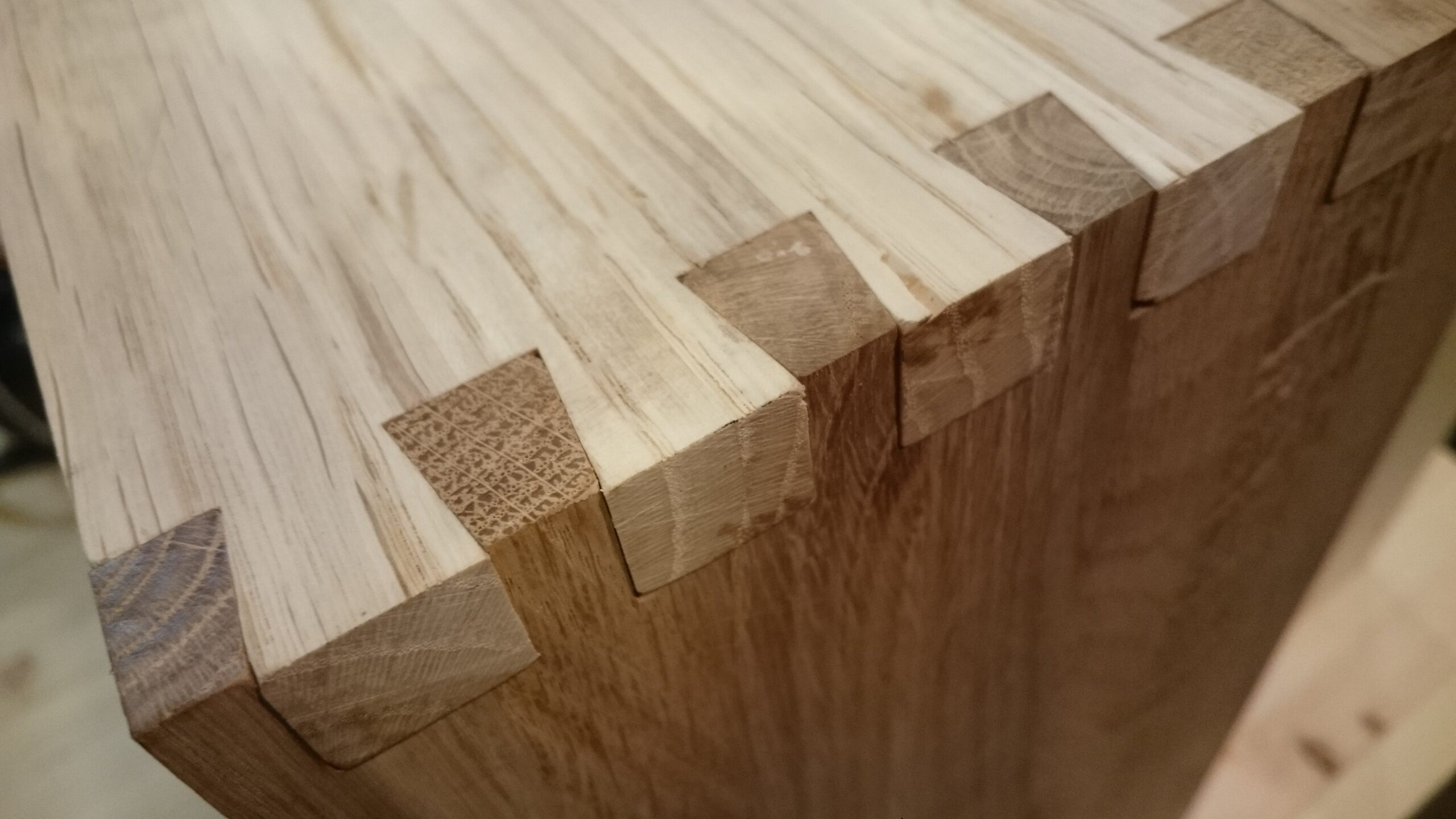
Dovetail joinery is both elegant and strong, making it a hallmark of mission craftsmanship. Its interlocking trapezoidal shapes look similar to a bird’s tail, giving it its name. One piece of wood has angled tails, while the other has corresponding pins. When the two sides are fit together, they create a lock that’s almost impossible to separate. 

In fact, dovetail joinery is even stronger under pressure, making it ideal for joints that experience frequent stress and movement, such as those in drawer construction. The joints’ tensile strength and resistance against pulling force ensures that the drawer cannot be pulled apart, even with heavy items inside. 

Dovetail joinery doesn’t require mechanical fasteners like screws or nails, making it an aesthetically pleasing option. In fact, these joints often become a highly desirable decorative feature, showcasing the quality wood and expert craftsmanship that went into creating the piece. 

4. Box Joint

The box joint, also known as the finger joint, features a row of rectangular projections (fingers) and corresponding cutouts that, when put together, interlock similarly to dovetail joinery. While it lacks some of the strength of dovetail joinery, the box joint is still incredibly sturdy. 

Box joints are a great option for storage or load-bearing furniture, as the interlocking fingers provide plenty of surface area for gluing. They’re frequently used in boxes or drawer construction, providing an attractive blend of aesthetics and functionality.

Explore 5 Wood Joinery Techniques Used in Mission Furniture

5. Mortise and Tenon

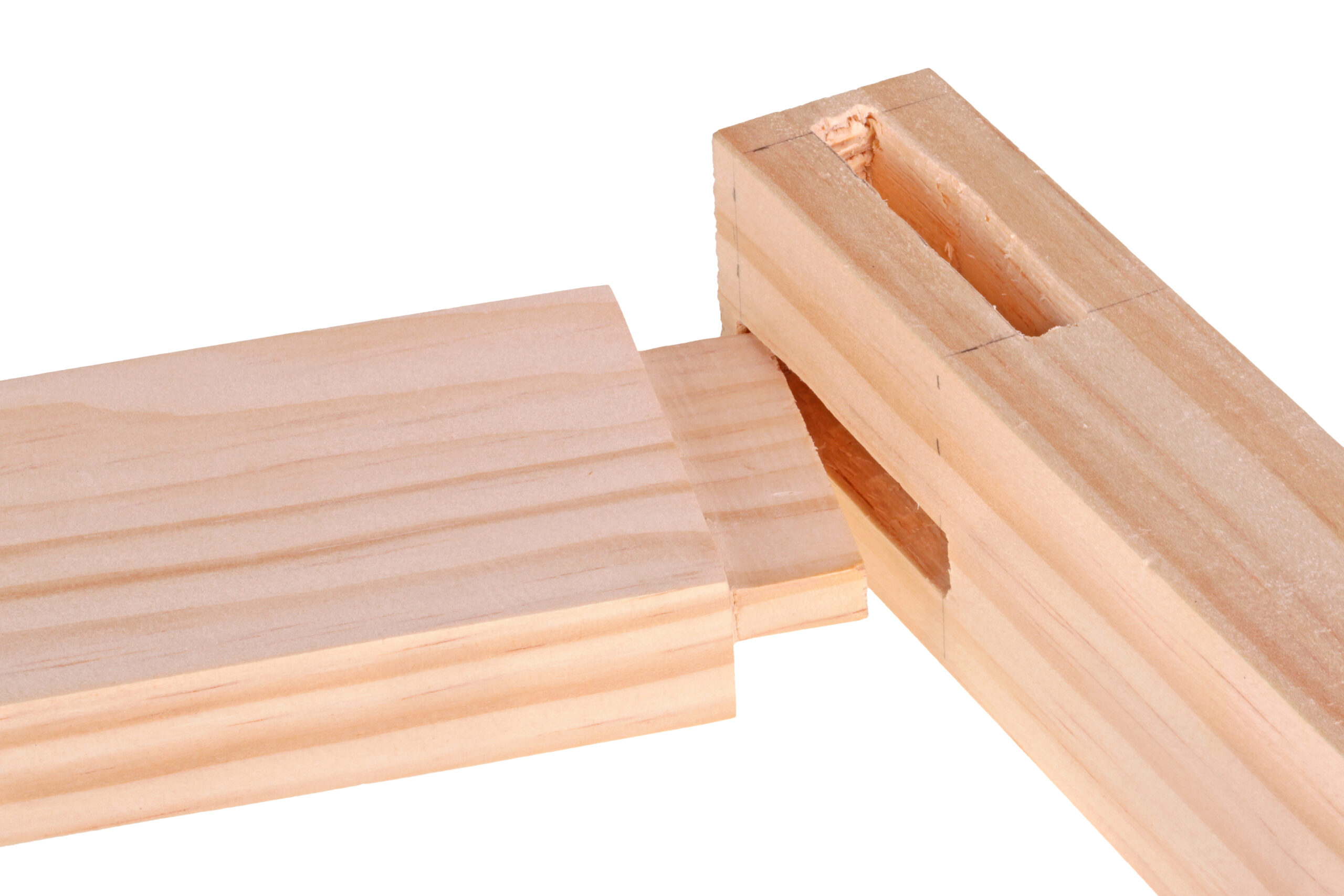
As one of the most respected forms of joinery, the mortise and tenon joint is known for its simplicity and effectiveness. It has become a staple in crafting tables, chairs, and frames. There are many variations on this joint, including doweled, blind, and keyed. In all of them, the tenon — a protrusion formed on the end of one piece of wood — fits into the mortise, which is a hole cut into the other piece. 

The tight fit between the two pieces maximizes the joint’s strength and stability. It’s able to withstand tension and compression by distributing weight and stress evenly across a wide area, making mortise and tenon joints ideal for heavy-duty applications.

Quality Craftsmanship at Sugar House Furniture

At Sugar House Furniture, we pride ourselves on bringing you outstanding mission furniture that will last for years to come. All of our pieces are made with expert craftsmanship, and everything from the joinery to the finishes is of the highest quality. Stop by our store today and see for yourself!

Filed Under: Furniture

« Previous Page
Next Page »

About

Sugar House Furniture provides finely-crafted mission furniture to residents throughout the Salt Lake City area, who are looking to add an extra touch of elegance and quality to their home.

2892 S. Highland Drive
Salt Lake City, Utah 84106
(801) 485-3606

Hours

Monday 10 AM - 7 PM
Tuesday 10 AM - 6 PM
Wednesday 10 AM - 6 PM
Thursday 10 AM - 6 PM
Friday 10 AM - 6 PM
Saturday 10 AM - 5 PM
Sunday Closed

SUBSCRIBE

Follow Us

Sugarhouse Furniture - Facebook Sugarhouse Furniture - Twitter Sugarhouse Furniture - Instagram Sugarhouse Furniture - Instagram

2026Sugar House Furniture | All Rights Reserved | Privacy Policy | Terms | XML Sitemap | Sitemap | Site by PDM